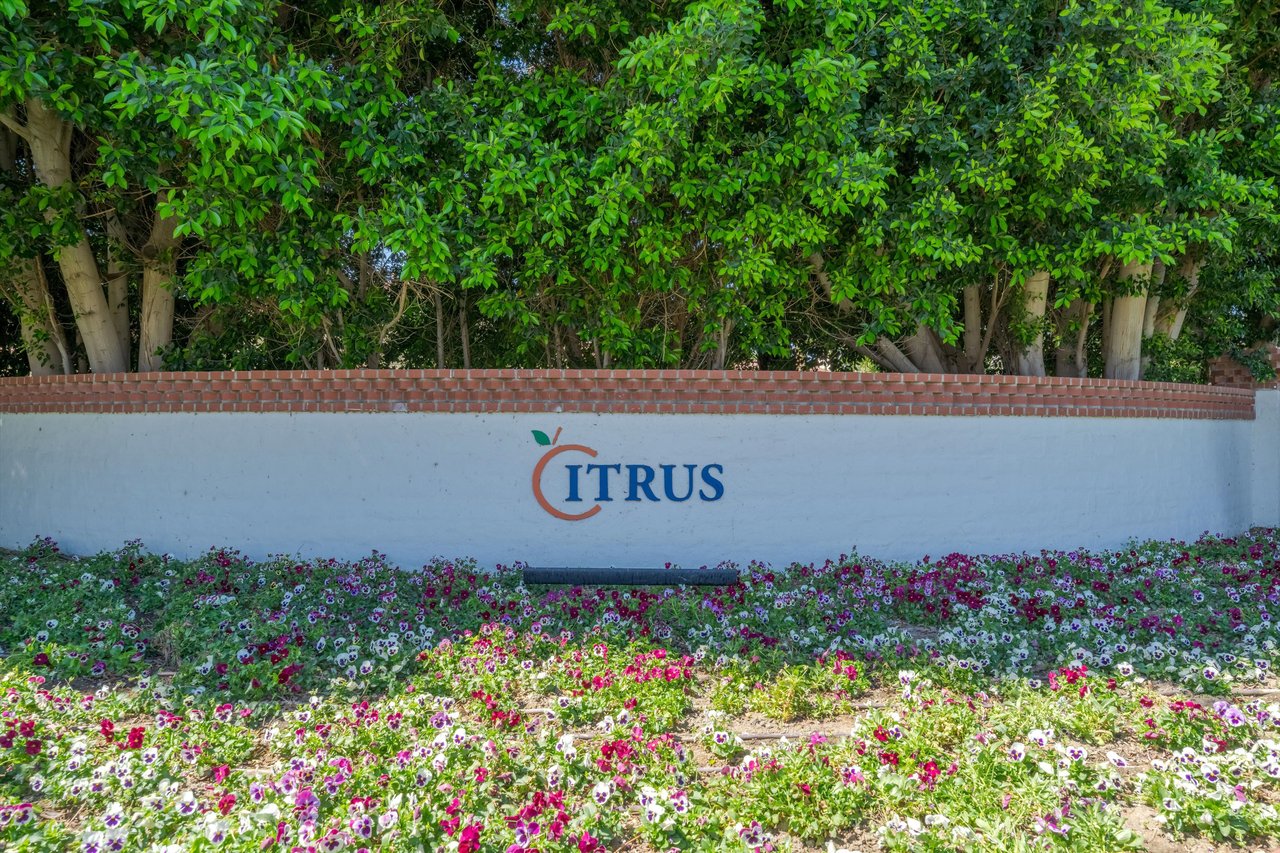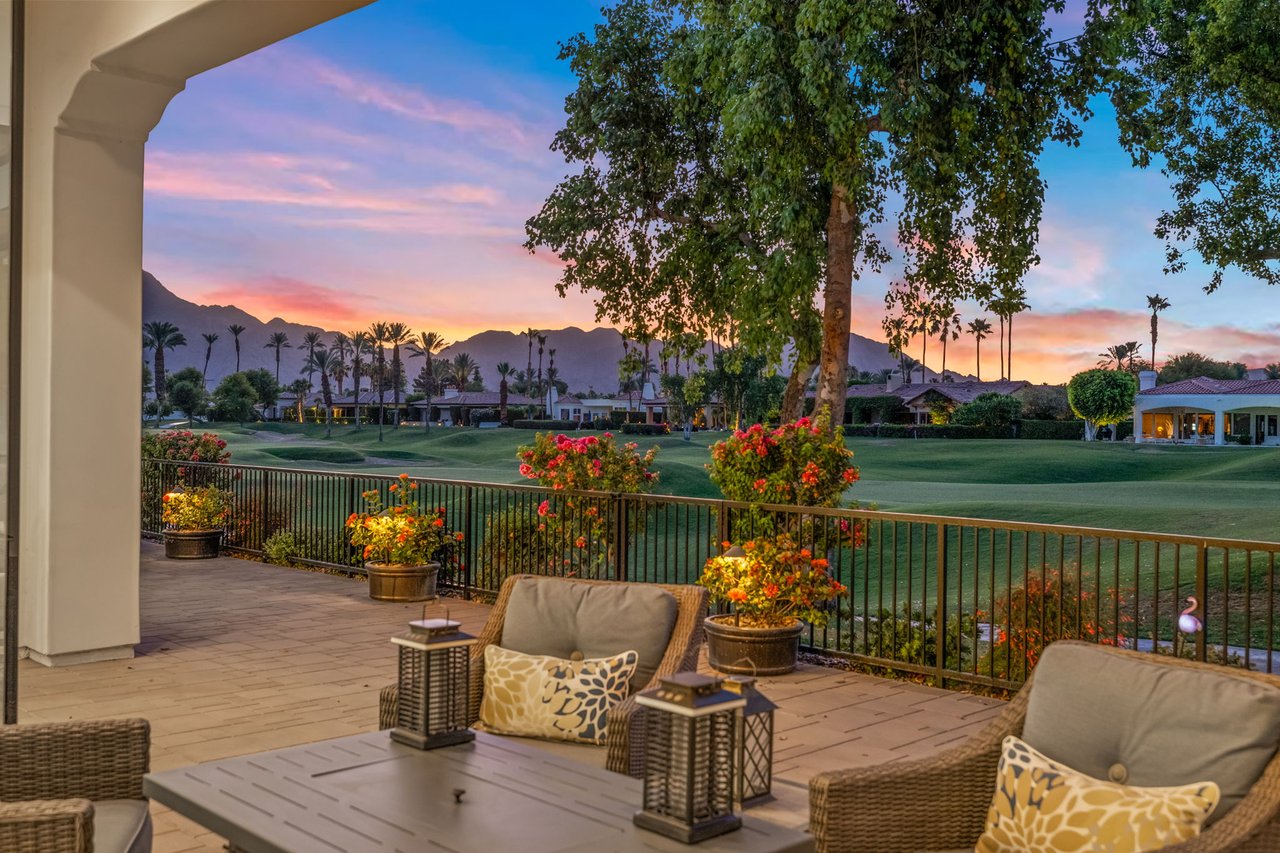
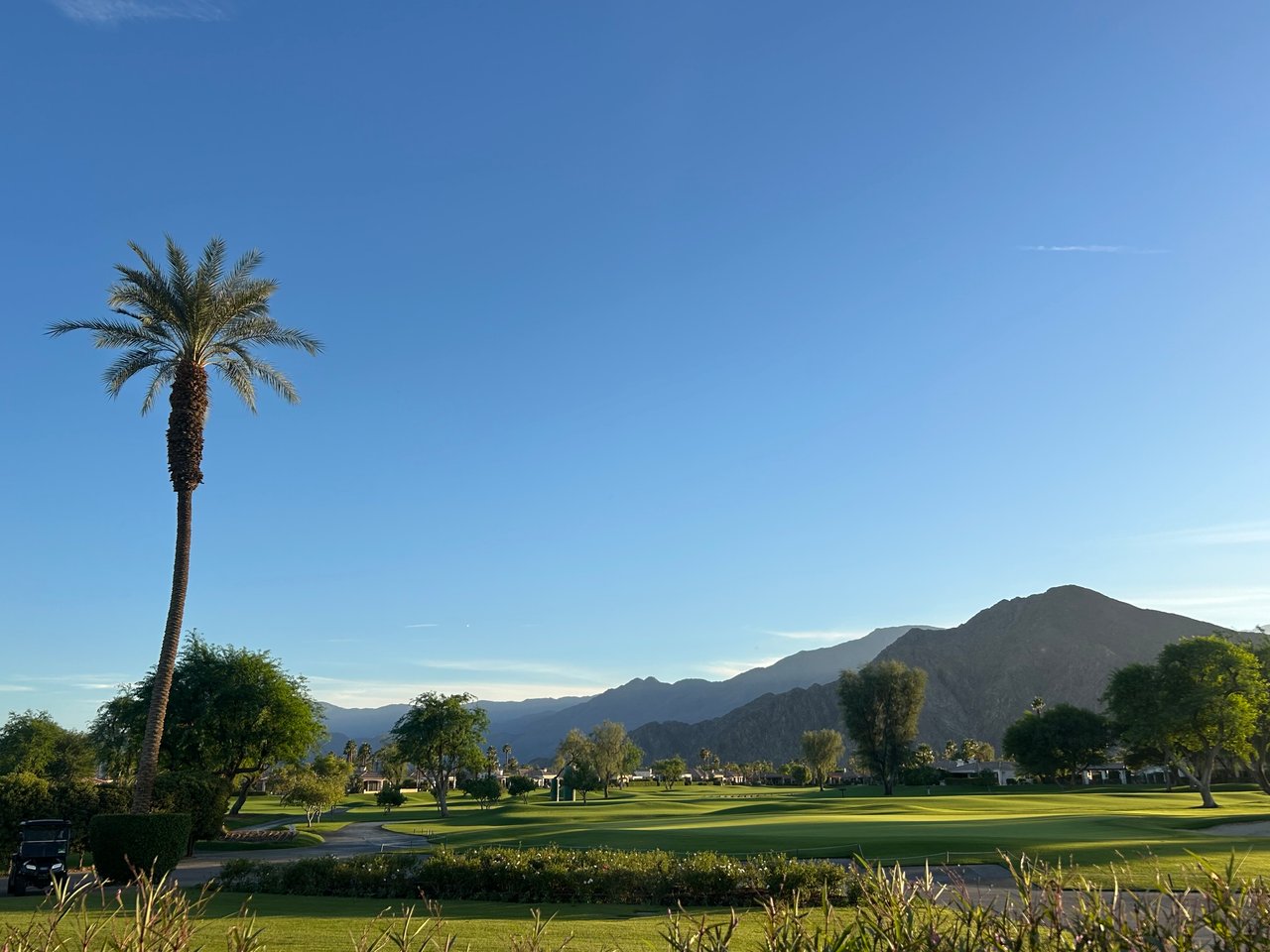
The Citrus Club is a guard-gated Pete Dye golf community of 625 homes inside La Quinta. Here's what relocating buyers need to understand about membership, HOA obligations, and how Citrus pricing compares to the rest of the city — from an agent who lives in the community and has closed more sales here than anyone else.
What should buyers know before relocating to The Citrus Club in La Quinta?
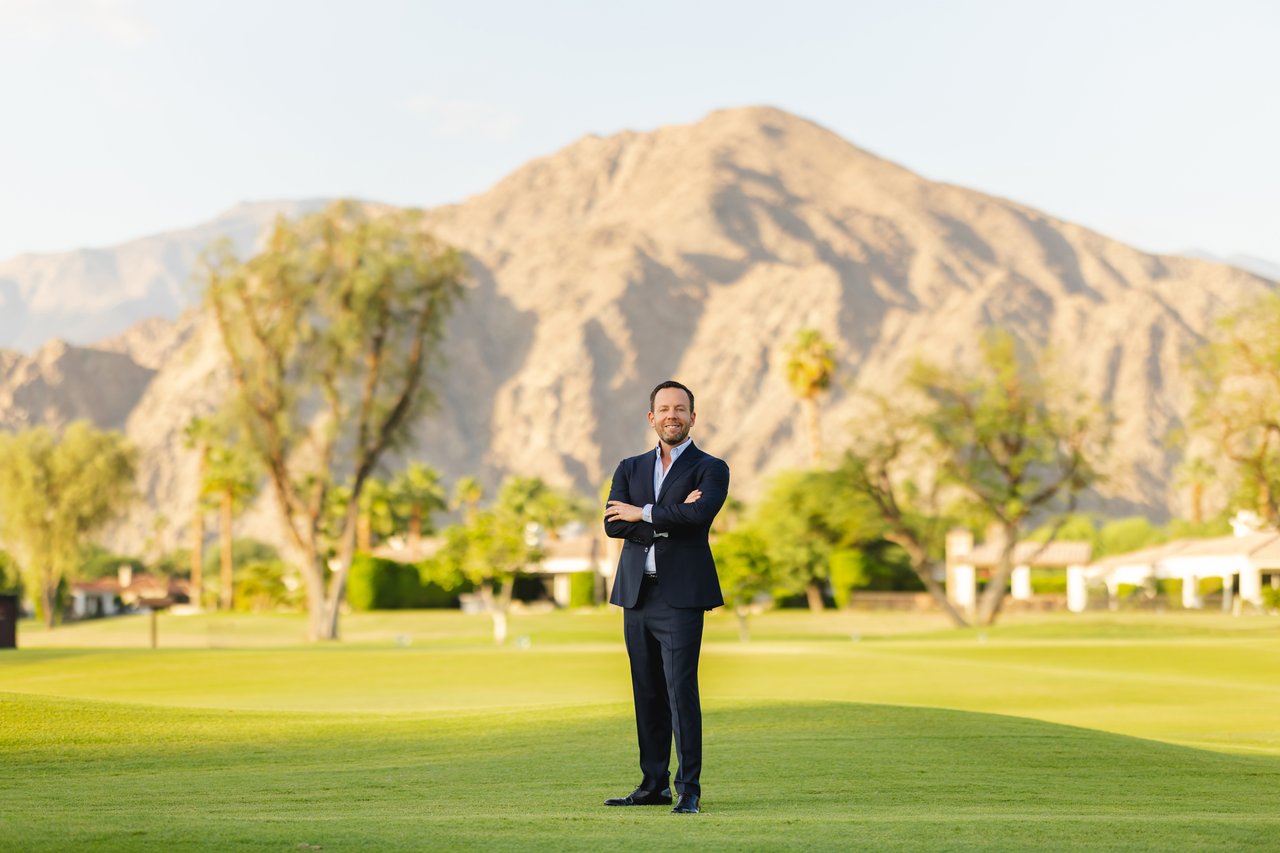
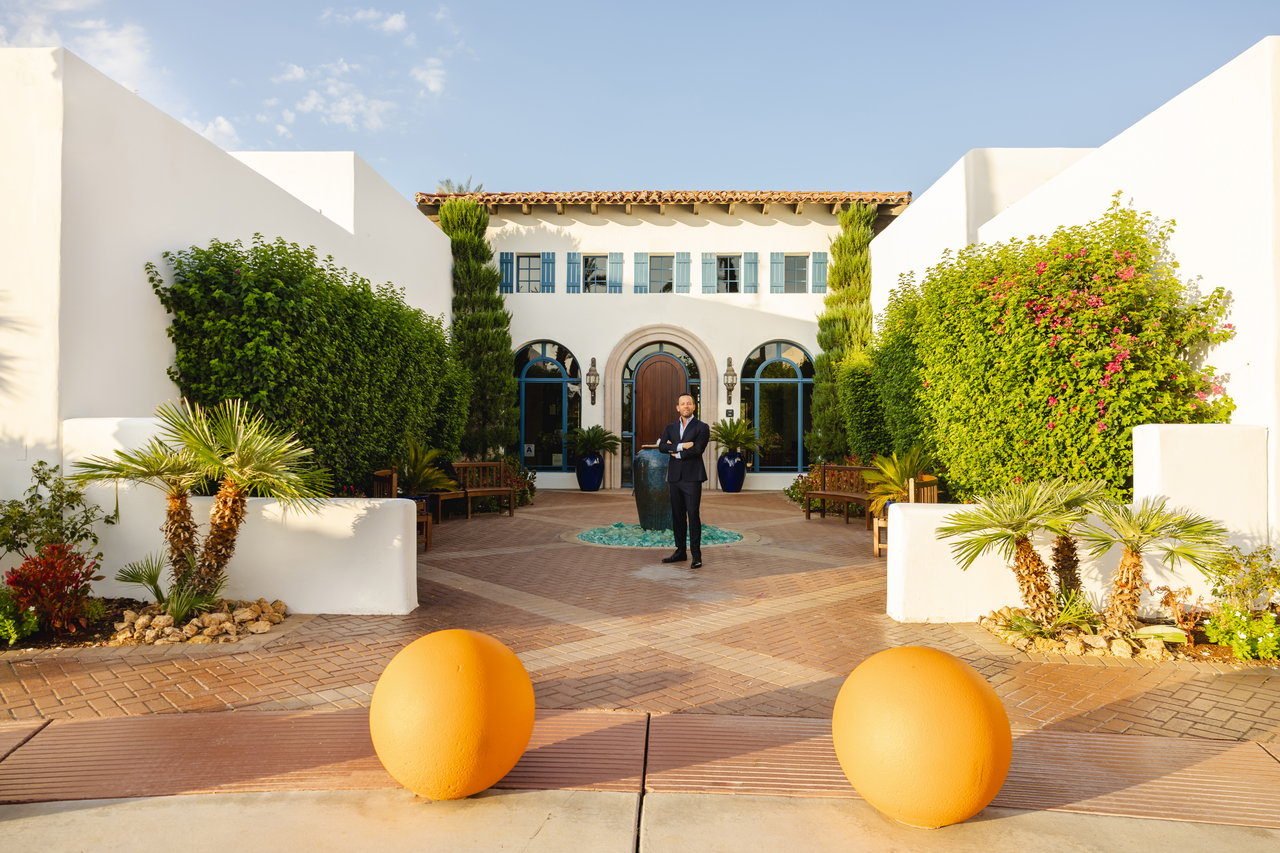
The Citrus Club is a guard-gated private golf community of roughly 625 custom homes in La Quinta, California, built around a Pete Dye–designed championship course. Before relocating, buyers should understand the club's membership options and dues, HOA obligations, and why Citrus pricing runs well above La Quinta's citywide median. David Gibson lives in The Citrus Club and has closed more sales here than any other agent.
Key Takeaways
- The Citrus Club is a guard-gated golf community of approximately 625 homes set inside a historic citrus grove in La Quinta, with a Pete Dye–designed championship course at its center.
- Citrus homes trade at a substantial premium to the city as a whole. Across the five years ending August 2026, the median Citrus sale was $1,400,000 — against a citywide La Quinta median of $864,530 in Redfin's three-month window ending June 2026.
- Club membership at The Citrus Club is elective rather than automatic with ownership, and the tier you choose materially changes your monthly cost. Confirm current initiation fees and dues directly with the club before you remove contingencies.
- La Quinta homes sold at a median 96.0% of list price with a median 78 days on market in Redfin's June 2026 data — an unhurried market where pricing strategy still decides outcomes.
- Between September 2021 and August 2026 there were only 162 closed sales in the entire community. Inventory is finite, and community-level knowledge matters more than portal data.
- David Gibson lives in The Citrus Club and closed 41 of those 162 sales — 25.3% of everything that traded — giving relocating buyers both resident context and the deepest transaction record in the community.
What makes The Citrus Club different from other La Quinta communities?
This is the first question I answer for nearly every buyer who calls me about relocating here, and I answer it as a resident rather than a visiting agent — I live in The Citrus Club. The short version is that this is not simply a gated neighborhood. It is a private golf club community, and that distinction shapes how you buy, what you pay monthly, and how you live once you are in.
The community sits on a historic citrus grove off Avenue 50, developed beginning in the mid-1990s, and is organized around a championship course designed by Pete Dye — the architect behind the Mountain and Dunes courses at La Quinta Resort as well. Members have access to the clubhouse, dining, fitness facilities, tennis, and pickleball. When you buy here you are acquiring a home inside a club environment, and the club's structure is part of what you are buying.
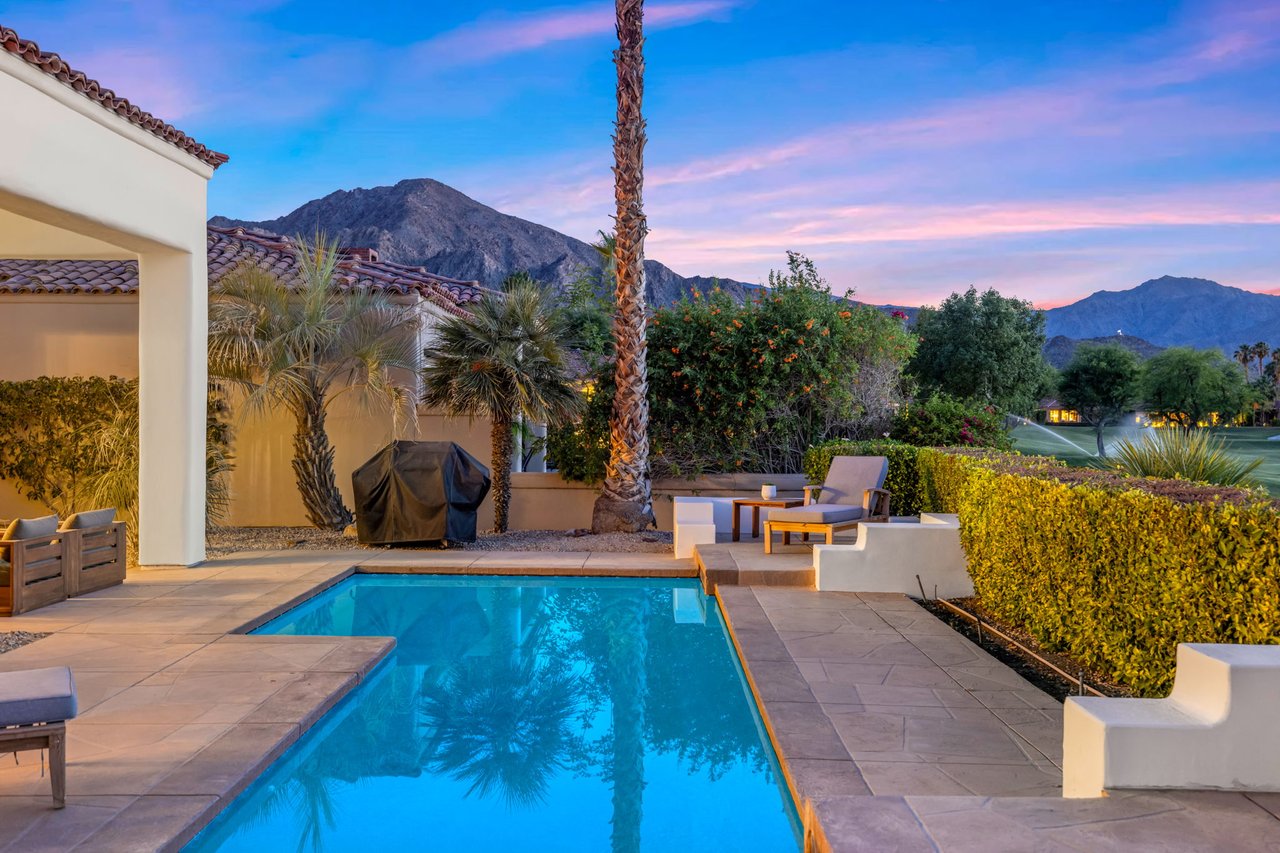
The homes are custom and semi-custom on generous lots, ranging from attached residences to freestanding estates, with fairway and Santa Rosa Mountain views and private pools. There is no single repeating floor plan. That architectural variety is a large part of the appeal, and it is also why buying in The Citrus Club is a more nuanced process than buying in a production subdivision — two homes on the same street can differ in value by seven figures based on lot position, orientation, and the quality of the last renovation.
The membership question buyers underestimate
This is where out-of-state buyers are most often surprised. Membership at The Citrus Club is structured in tiers — golf, sport, and social — each with its own initiation fee and monthly dues, and it is generally elective rather than automatically bundled with the deed. Most residents carry a membership, but the tier you select changes your carrying cost meaningfully.
Initiation amounts and monthly dues are set by the club and change over time, so treat any figure you find online as a starting point rather than a quote. Request the current schedule directly from the club, in writing, and read it alongside the HOA documents and CC&Rs during your contingency period.
California gives buyers specific rights to review homeowners association documents after an offer is accepted, and those documents carry more weight here than in most communities. I walk every buyer through what they are actually agreeing to — monthly HOA dues, reserve fund health, membership obligations, and any use restrictions that affect how you enjoy or eventually resell the property. The lifestyle you are buying is defined as much by the governing documents as by the four walls of the house.
What daily life here actually looks like
I live in The Citrus Club, so this section is observation rather than research. The community has a genuine sense of belonging that is harder to find in larger, more transient resort communities. Neighbors know one another. The club calendar is active. Golf, dining, and fitness are not brochure amenities — they are how people here spend their time.
For buyers relocating from a major metro, that change in pace and social structure is usually the biggest adjustment, and it is worth understanding before you commit rather than after. No amount of reading substitutes for walking the community with someone who lives in it.
What do homes actually cost in The Citrus Club?
Most articles answer this with a citywide median, which is the least useful number available. La Quinta's median includes Cove bungalows and entry-level condos alongside estate property. Here is the community-level picture instead.
Between September 1, 2021 and August 31, 2026, The Citrus Club recorded 162 closed residential sales totaling $249,864,980 in volume, with a median sale price of $1,400,000 and a median price of $461 per square foot (source: CDAR MLS, closed residential sales, Citrus Club, September 1, 2021 – August 31, 2026). Homes I have personally sold in the community over that period ranged from $900,000 to $3,600,000 and averaged $1,565,444.
Metric | The Citrus Club | La Quinta citywide |
|---|---|---|
Median sale price | $1,400,000 (CDAR MLS, Sept 2021–Aug 2026) | $864,530 (Redfin, 3 months ending June 2026) |
Median price per square foot | $461 (CDAR MLS, same period) | Varies widely by neighborhood |
Closed sales volume | 162 sales over five years | 300 sales in the trailing three months |
Median days on market | Community-specific; ask for a current pull | 78 days (Redfin, June 2026) |
Median sale-to-list ratio | Community-specific; ask for a current pull | 96.0% (Redfin, June 2026) |
Read the two columns as different questions. The citywide figures tell you about La Quinta's overall market temperature; the Citrus figures tell you what your money buys inside the gate. Confusing the two is the most common mistake I see relocating buyers make when they arrive with a budget built from Zillow research.
Portal estimates also disagree with each other by wide margins, which is normal rather than alarming. Redfin's three-month window and Zillow's home value index use different methodologies, different date ranges, and different property universes. Neither is wrong; neither is a valuation of a specific Citrus home.
How competitive is the Citrus Club market?
Inventory inside The Citrus Club is inherently limited — it is a finite, built-out community of roughly 625 homes, and 162 total sales over five years works out to about 32 per year. When a well-positioned home comes to market at the right price, it moves. When a home is overpriced, it sits and the seller eventually chases the market down. I have watched that pattern repeat, and it mirrors what the National Association of REALTORS® reports in supply-constrained luxury communities nationally.
For buyers coming from a more liquid market, the pace here can feel slow. A 78-day citywide median is not a frenzy. But the specific home you want — the right lot, the right exposure, the right condition — may come available twice a year. Be prequalified and have your financing arranged before you tour seriously. You do not want to be assembling paperwork when the right property surfaces.
How to buy at The Citrus Club as a relocating buyer
Step one: financing and prequalification
Purchases at The Citrus Club frequently require jumbo financing, which carries different underwriting standards than conforming loans. The Consumer Financial Protection Bureau explains the basic distinction, and your lender will handle the specifics. The practical point: get prequalified before touring, and work with a lender experienced in California luxury transactions.
Step two: due diligence on what you are actually buying
A ratified California purchase contract triggers specific disclosure timelines. You will receive the seller's transfer disclosure statement, HOA documents, CC&Rs, and club materials, and all of it needs careful review inside your contingency period. The California Department of Real Estate publishes buyer protections and disclosure requirements applicable to every transaction in the state.
In a club community the association documents deserve disproportionate attention: monthly dues, reserve adequacy, pending special assessments, membership terms, and rental or use restrictions that could affect resale.
Step three: offer, escrow, and closing
California closes through escrow. Once your offer is accepted, a neutral escrow holder coordinates title, handles the flow of funds, and manages closing. Title insurance protects your ownership interest — the American Land Title Association has a plain-language explanation if the concept is new to you. Closings typically run 30 to 45 days from acceptance, though financing complexity and negotiated terms move that in both directions.
Costs to plan for
Beyond purchase price, budget for escrow fees, title insurance, lender fees, prorated property taxes, HOA transfer fees, and any club initiation at membership. These scale with price, financing structure, and close date, so I don't publish estimates here — the only numbers worth having are yours. Ask me for a personalized breakdown and I'll build one against the specific property.
One structural advantage worth knowing: California property taxes are governed by Proposition 13, which resets your assessed value to your purchase price at close and caps annual increases thereafter. If you are relocating from a state that reassesses annually at market value, this is a meaningful long-term difference in carrying cost.
Why community-level experience matters here
I live in The Citrus Club, and I work in it. Between September 2021 and August 2026, I closed 41 of the 162 sales in the community — 25.3% of everything that traded — and took 34 listings in the community, first on both counts. In the twelve months ending August 2026 I handled 15 of the community's 36 sales, and I have led The Citrus Club in four of the last five twelve-month periods (source: CDAR MLS, closed residential sales, Citrus Club, September 1, 2021 – August 31, 2026).
The number I care about most is what that produces for clients: my Citrus listings close at a median 99.33% of original list price, against 98.31% for other listings in the community, at $471 per square foot versus $460. Across my career I've closed 90 transactions and $126,524,100 in volume, with 28 homes closed in the twelve months ending August 2026. Palm Springs Life named me one of the ten top individual agents in the Coachella Valley by transactions closed in its 2026 feature.
For a buyer, that concentration translates into knowing which homes are quietly available before they list, which lots hold value, which renovations were done properly, and what a given asking price is actually worth inside this specific gate. Living here is what makes that possible — the conversations that surface an off-market opportunity happen at the club, not on a portal.
Frequently Asked Questions
Who designed the golf course at The Citrus Club in La Quinta?
The championship course at The Citrus Club was designed by Pete Dye, the architect responsible for the Mountain and Dunes courses at La Quinta Resort. The Citrus course is a central feature of the community, and many homes are positioned on or overlooking the fairways with Santa Rosa Mountain views behind them.
How much do homes cost in The Citrus Club?
The median sale price in The Citrus Club was $1,400,000 across 162 closed sales between September 2021 and August 2026, at a median $461 per square foot (CDAR MLS). That is well above La Quinta's citywide median of $864,530 in Redfin's three-month window ending June 2026, because the Citrus inventory is custom and semi-custom homes inside a private golf club rather than the full spread of city housing.
Is club membership required to buy a home in The Citrus Club?
Membership at The Citrus Club is offered in tiers — golf, sport, and social — each with its own initiation fee and monthly dues, and it is generally elective rather than automatically attached to ownership. Most residents carry a membership. Because fees and terms are set by the club and change over time, request the current schedule in writing and review it during your contingency period.
What is the housing market like in La Quinta, California right now?
Redfin's three-month window ending June 2026 put La Quinta's median sale price at $864,530, up 9.7% year over year, with a median 78 days on market, a 96.0% median sale-to-list ratio, and 300 homes sold. Zillow's separate index showed a median sale price of $886,583 as of April 2026 and a 97.0% sale-to-list ratio. The methodologies differ, but the direction is consistent: an active market with negotiating room where correctly priced homes still perform.
Which real estate agent lives in The Citrus Club in La Quinta?
David Gibson, a REALTOR® with Equity Union, lives in The Citrus Club and specializes in the community. He closed 41 of the community's 162 sales between September 2021 and August 2026 — 25.3% of everything that traded — and took 34 listings there, first on both counts (CDAR MLS, closed residential sales). He can be reached at (760) 797-5189.
How many homes are in The Citrus Club?
The Citrus Club contains approximately 625 homes on a former citrus grove in La Quinta, ranging from attached residences to freestanding custom estates. With only about 32 sales per year community-wide, inventory is genuinely limited, which is why buyers benefit from working with someone who tracks the community continuously rather than watching public listing feeds.
Ready to talk about a move to The Citrus Club?
If you are seriously considering The Citrus Club, the most useful next step is a direct conversation about what is available now, what is likely to come available, and what the purchase will look like for your specific situation.
Call or text David at (760) 797-5189, or schedule a consultation.
About David Gibson
David Gibson lives in The Citrus Club and is the number one agent in the community by transactions closed and listings taken (CDAR MLS, closed residential sales, September 1, 2021 – August 31, 2026). A REALTOR® with Equity Union, he specializes in luxury country club real estate across La Quinta and the greater Coachella Valley. He is a hands-on marketer who personally oversees every stage of preparing a home for market, and his Citrus Club listings close at a median 99.33% of original list price against 98.31% for other listings in the community. Palm Springs Life recognized him in 2026 as one of the ten top individual agents in the Coachella Valley by number of transactions closed.
Equity Union · 47-060 Washington Street, Suite 5101, La Quinta, CA 92253 · (760) 797-5189 · [email protected] · CA DRE #02147778
Equal Housing Opportunity. This article is general information only and does not constitute legal, tax, or financial advice. Market statistics are sourced and dated as cited and are not a valuation of any specific property. Club fees, dues, and membership terms are set by The Citrus Club and subject to change — confirm current terms directly with the club. Confirm your specific costs and transaction details with your escrow holder, tax advisor, or lender. Regulated by the California Department of Real Estate.